


WildIndex Intelligence / Property operations
Hunting Property Management: A Practical System for Wildlife Records, Hunters, and Land
Organize the places, people and observations behind each season so management decisions rest on a usable property history.
By WildIndex Editorial Team · Last reviewed October 25, 2026
Managing a hunting property means managing habitat and harvest, but it also means keeping an accurate account of what happened on the land. Wildlife sightings, harvests, camera deployments, hunter outings, access changes and habitat work accumulate all year. If they remain in separate phones and notebooks, the next season starts without a dependable baseline. TPWD’s deer-management plan guidance places property history, habitat description, hunting history, survey information and harvest records together for a reason: each explains part of the others.
01 / Foundation
Start with a property inventory
Document the property boundary, access points, roads and trails, hunt sites, blinds or stands, camera sites, water, and habitat features that matter to the management plan. Record feeders or attractants where they are lawful and used. Give each site a stable name. A pin labelled “South Oak 3” is far more useful across seasons than a vague reference to “the back stand.”
Build the map with people who know the ground. Note when a stand moved, a road closed, a camera shifted, or a water source changed. A map is an operating reference, not a survey of legal boundaries or proof of access rights. Review leases, landowner instructions and local rules separately. The site-selection guide shows how wind, access and disturbance affect where a hunter should set up.
Inventory the habitat as well as the hardware. TPWD recommends describing vegetation, water, soils, topography, historic land use and prior habitat treatments. Such context helps a manager see whether a change in observations might coincide with brush work, drought, livestock pressure or neighboring land use. See the plan framework.
02 / Shared vocabulary
Create one observation system for the group
Decide what a hunter should record after an outing: the hunt site, start and end time, species seen, approximate count, harvests, and relevant conditions. For trail cameras, retain camera identity, deployment dates, site changes and photo review status. For harvests, collect the animal’s sex, estimated age where feasible, location, date, hunter and measurements that serve the property’s goals. The deer harvest tracking guide explains those fields in detail.
Use shared definitions. One participant’s “young buck” may be another’s “mature buck,” and a photograph may not justify an age call at all. Permit “unknown” rather than forcing a guess. Keep raw observations, later corrections and the person who made them traceable. This makes records easier to audit and compare. See the season record checklist and camera-management guide for field-specific details.
Give new hunters a short field protocol before opening day. A checklist with site names and essential fields is easier to follow than an extensive data policy. An admin can then review missing or unusual entries throughout the season rather than discovering them during year-end reporting.
03 / Coordination
Decide who may enter, review and change records
A property with several hunters needs more than a shared folder. Assign someone to maintain the map and site names, someone to review harvest records, and a clear owner for official reporting. The same person can hold several responsibilities, but each responsibility should be explicit. A new hunter should know whom to tell when a stand is unsafe, a gate is locked, a camera has moved or a harvest entry needs correction.
Separate access to operational information from authority to edit the property history. Hunters may need current hunt-site assignments and a way to submit their own observations; an administrator may need to correct duplicate entries and inspect the whole season. Document any edits that change biological or regulatory details. For leases and clubs, record the landowner’s access instructions, participant roster and any conditions imposed by the lease. The digital roster should be reviewed when people join or leave.
Set a communication routine for matters that should not wait for the annual review. A harvest with uncertain tag information, a damaged access road or a camera on the wrong property boundary requires direct attention. The shared record is a memory aid; it should not replace immediate coordination or the legal records required by a wildlife agency.
TPWD’s planning framework treats how a property is hunted and who participates as part of the management context. Keeping those details current makes the wildlife record more interpretable and the operation easier to hand over when a manager changes.
04 / Human activity
Track hunting pressure alongside wildlife
Wildlife records have an observation process behind them. If hunters visit a site less often, fewer sightings from that site may be recorded even if animal use is unchanged. If a new stand opens in a productive drainage, more sightings may reflect a change in observation coverage. Record who hunted, where, when and how often, including outings with no sighting or harvest.
Compare site use by week or phase of the season. A manager may notice that all harvests came from a small portion of the property, or that a camera site with many photos received little hunter effort. These are prompts for investigation, not proof of a cause. Weather, vegetation, food availability and access can all affect what hunters and cameras detect. The hunting-pressure guide explains what managers can measure. TPWD’s planning guidance explicitly includes hunting history and numbers of hunters among the facts to collect. Read the guidance.
05 / Interpretation
Separate observations from conclusions
“Camera A recorded fewer bucks this October” is an observation. “The buck population declined” is a conclusion that needs more evidence. Before comparing camera results, ask whether that camera operated for the same number of nights, at the same location and angle, in similar vegetation, with the same settings and attractant conditions. The field-technology guide explains camera detection bias and survey design.
Likewise, fewer harvested deer could result from lower hunter effort, a more selective harvest strategy, changed access or different animal availability. TPWD describes harvest records as useful when combined with population surveys and habitat information. See TPWD harvest-record guidance. Where a management decision depends on population size or trend, use a survey method suited to that question and ask a wildlife professional to help interpret it.
Keep a decision journal: what was observed, what alternative explanations were considered, what action was chosen and what outcome would trigger a review. This separates the evidence from the judgment made at the time.
06 / Season close
Review the property once a year
Schedule a short review after the hunting season while dates and site changes are still familiar. Compare harvest and sightings with hunter effort, camera coverage, habitat conditions and the goals set before the season. Note where data are too sparse or inconsistent to support a conclusion.
- Reconcile harvest entries, tags and any official reporting records.
- Summarize sex and age composition, with the limits of age estimates stated.
- Review hunter outings, site use and areas with little observation coverage.
- List camera moves, failures and periods when no camera was operating.
- Document repairs, water changes, vegetation work and access changes.
- Set a small number of measurable questions for the next season.
TPWD’s wildlife-management plan guidelines call for records of management practices, dates, costs, harvest numbers and deer measurements. The exact plan will differ by property; the discipline of retaining a baseline and reviewing it is broadly useful. Carry the resulting site repairs, hunter assignments and data questions into the next preseason checklist.
07 / Property record
How WildIndex supports the workflow
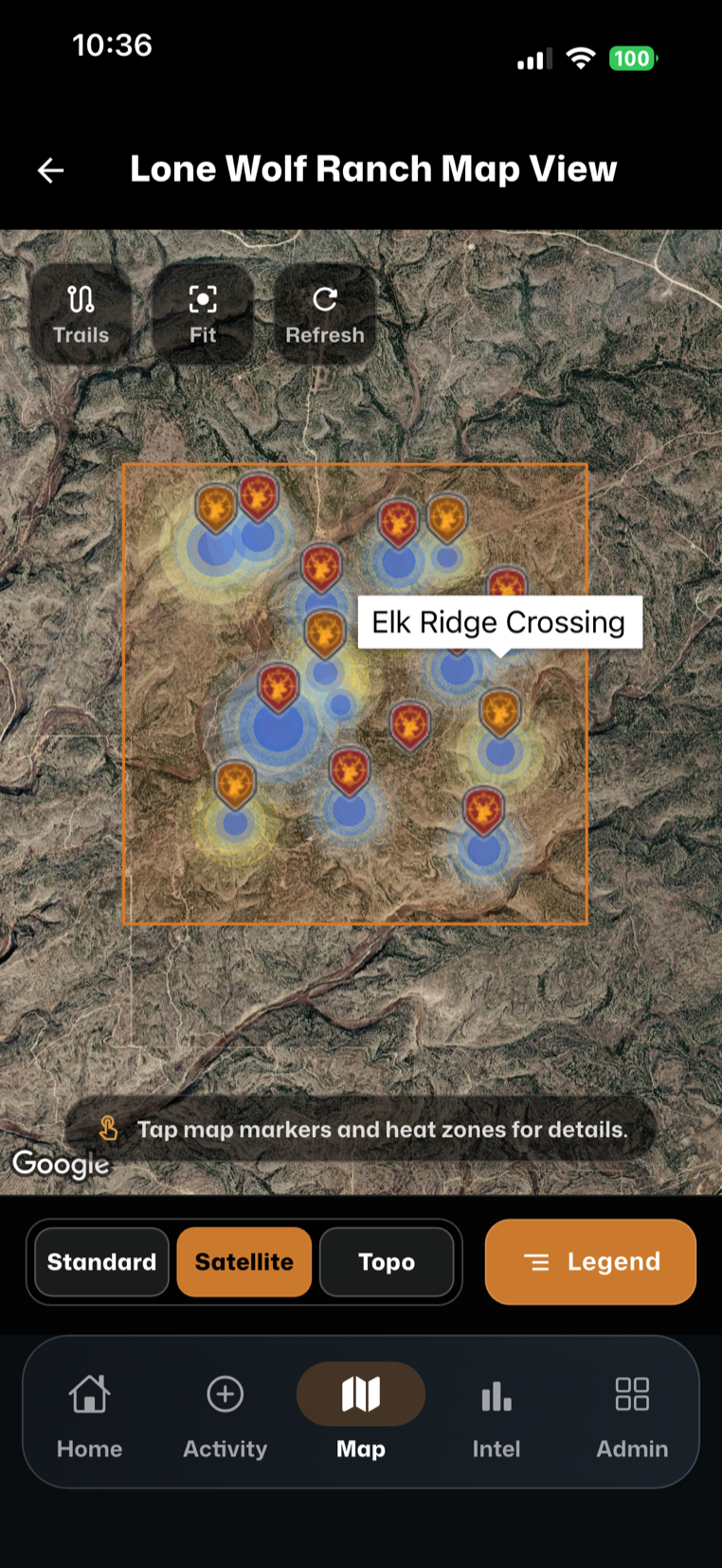
WildIndex ties a property map, hunt-site context, authorized users, sightings, harvests, camera review and Trophy Room history to the same property record. The Primary Admin manages the property and can assign Secondary Admins and other authorized roles; administrators can review entries across the group. Individual hunters contribute records from the field, while the property retains the history for season review.
The product can reduce the work of piecing together texts, spreadsheets and photo libraries, but the manager still needs clear field definitions and a review habit. Field Intel and property reports can help organize recorded activity; they are not substitutes for a professionally designed population survey. Texas MLDP properties should also keep the required TPWD log separate from the digital companion record.
Practical questions
What records should a hunting lease or club keep?
Keep the property inventory, participant and access information, hunt-site assignments, hunter outings, sightings, harvests, camera-site history, habitat work and any records required by the lease or wildlife agency. Set permissions so people see the information relevant to their role, and review the record at least once a season.
Does a shared record tell a manager what to harvest?
No. It supplies context for a decision. Harvest goals depend on habitat, survey evidence, the property’s objectives and applicable regulations.
References
Sources & Further Reading
- Texas Parks and Wildlife Department. Developing a Deer Management Plan Technical guidance.
- Texas Parks and Wildlife Department. Wildlife Management Plan Guidelines TPWD form and guidance.
- Raymond Sims and Jim Dillard, Texas Parks and Wildlife Department. White-tailed Deer Harvest Records Technical guidance.
- Mississippi State University Extension. Conducting Camera Surveys to Estimate Population Characteristics of White-Tailed Deer
- A. W. Parsons et al.. Do occupancy or detection rates from camera traps reflect deer density? Journal of Mammalogy 98(6):1547–1557. 2017. doi:10.1093/jmammal/gyx128.
WildIndex in the field
Give your hunting property one shared record.
Keep the map, authorized people and season history together so the next review begins with evidence.